Determination of Alcohol by Volume in Molasses
For fermenting molasses, the analysis of alcohol by volume is important as it allows monitoring whether yeasts are correctly converting sugars into alcohol. An increase in alcohol content indicates that fermentation is proceeding properly, while low or stable values may signal potential issues such as yeast stress or contamination.
This control makes it possible to assess process efficiency and the degree of sugar conversion into alcohol. In addition, knowing the alcohol content helps to intervene promptly to correct any anomalies. The data are also essential for optimizing subsequent stages, such as distillation, reducing waste and energy consumption.
Method
Test type: End Point.
Testing time: 11 minutes.
Analysis sessions with multiple samples are possible up to a maximum of 16 tests for CDR DrinkLab®.
...
Sample treatment
Dilute the sample prior to analysis as required by the method.
Principle of the test
Ethanol, in an alkaline environment, is oxidized through an enzymatic reaction and converted in acetic aldehyde in presence of NAD+, which in turns produces NADH. The increase of the absorbance, measured at 366 nm (end-point), is proportional to the concentration of ethanol in the sample.
...
Calibration curve
The calibration curve of the CDR DrinkLab® system confirmed excellent linearity across the entire measurement range.
...
Reagent test Kits
Measuring range
| Analyses | Measuring range | Resolution | Repeatability |
|---|---|---|---|
| Alcohol by volume [1-10] % | 1 - 10 %vol | 0.1 %vol | 0.1 %vol |
The perfect system for you
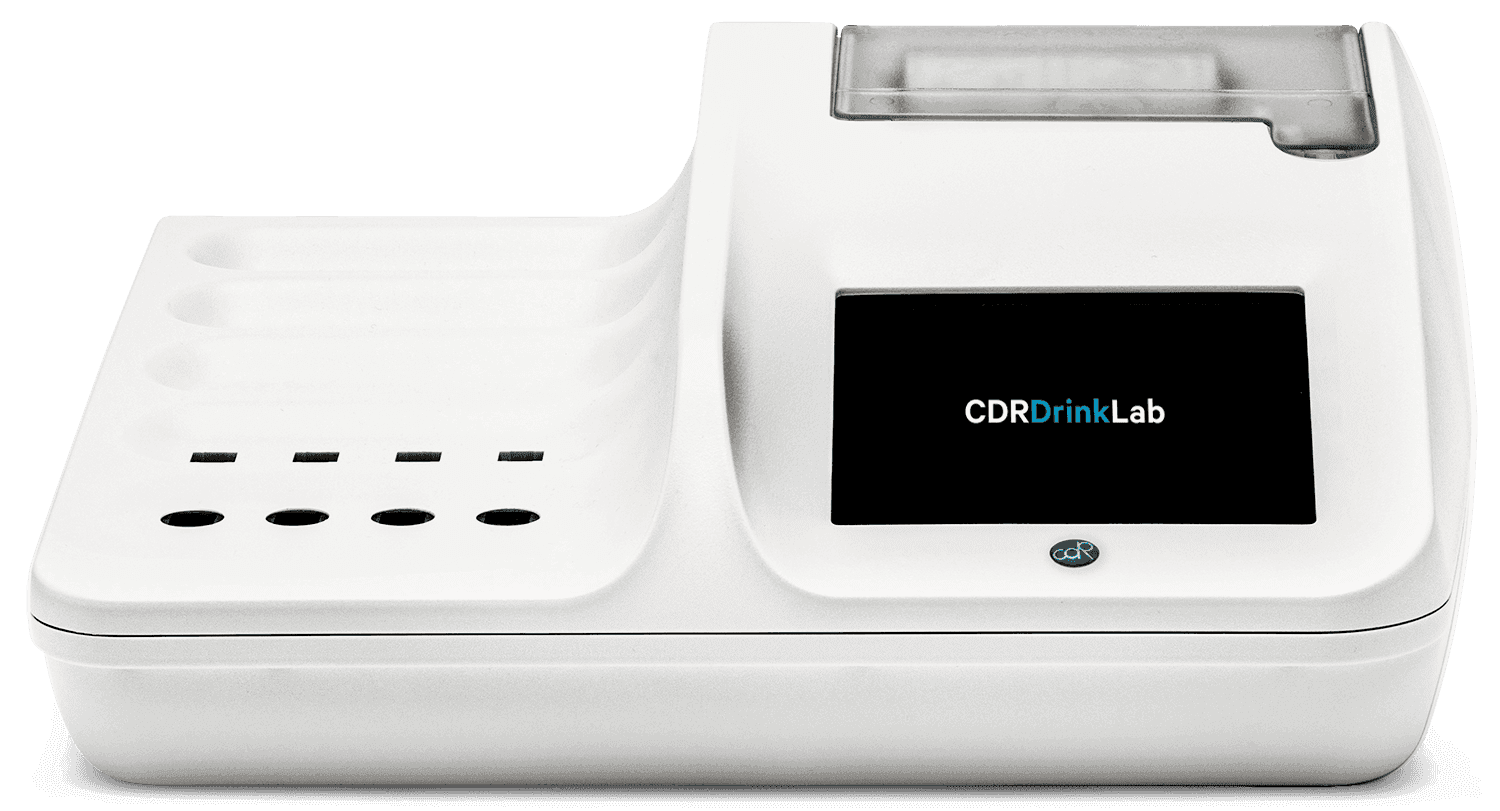
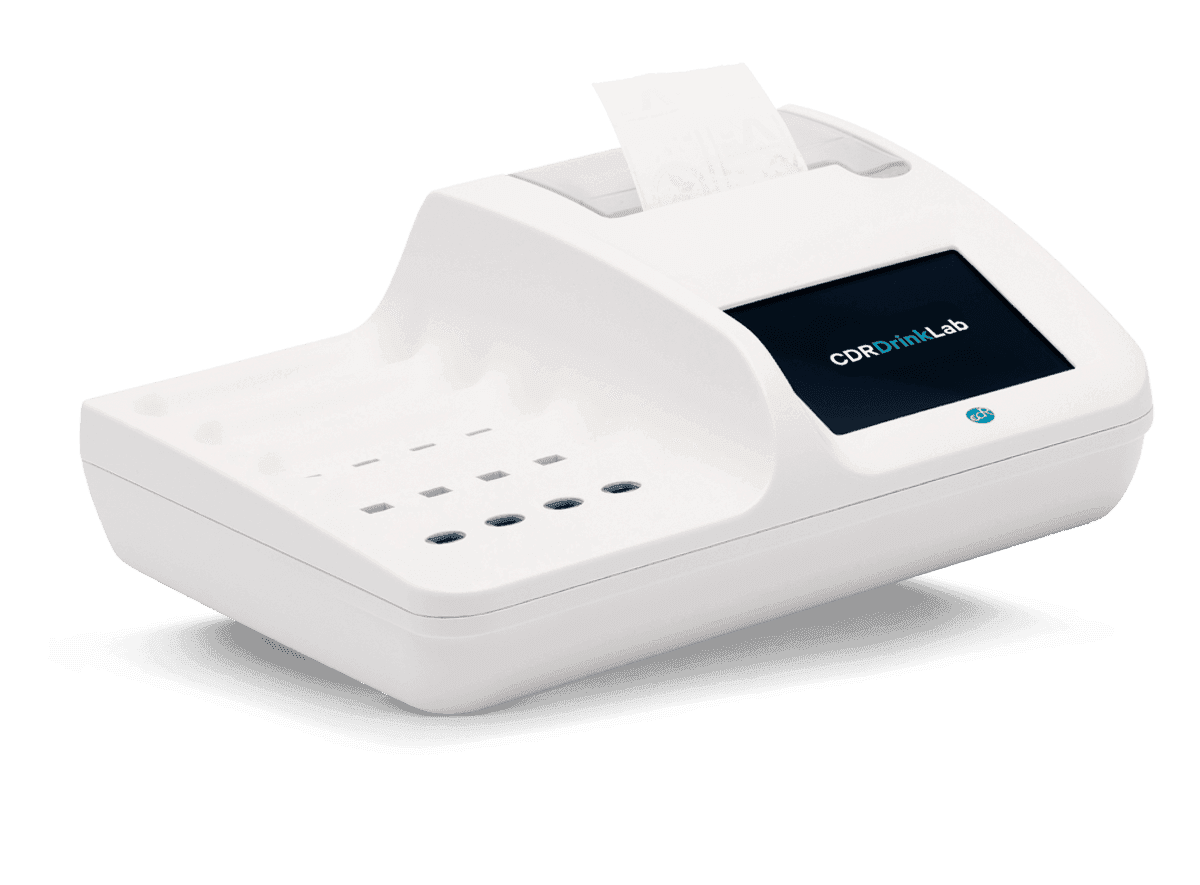
CDR DrinkLab®
Complete analysis panel, supplied already configured
Up to 16 determinations simultaneously
Possibility of carrying out analyses of the same sample
Integrated printer
Full connections (LAN - USB - Bluetooth barcode/QR code reader)