Determination of Lactic Acid (D+L) in Molasses
Lactic acid plays an important role in the fermentation of molasses because it helps control pH, making the environment more suitable for yeasts and less favorable to the development of undesirable microorganisms. This contributes to a more stable and safer fermentation. In addition, the presence of lactic acid and lactic acid bacteria promotes a better microbial balance and can improve fermentation efficiency. From a qualitative perspective, lactic acid also participates in the formation of aromatic compounds, contributing to a smoother and more complex final product.
Method
Test type: End Point.
Testing time: 6 minutes.
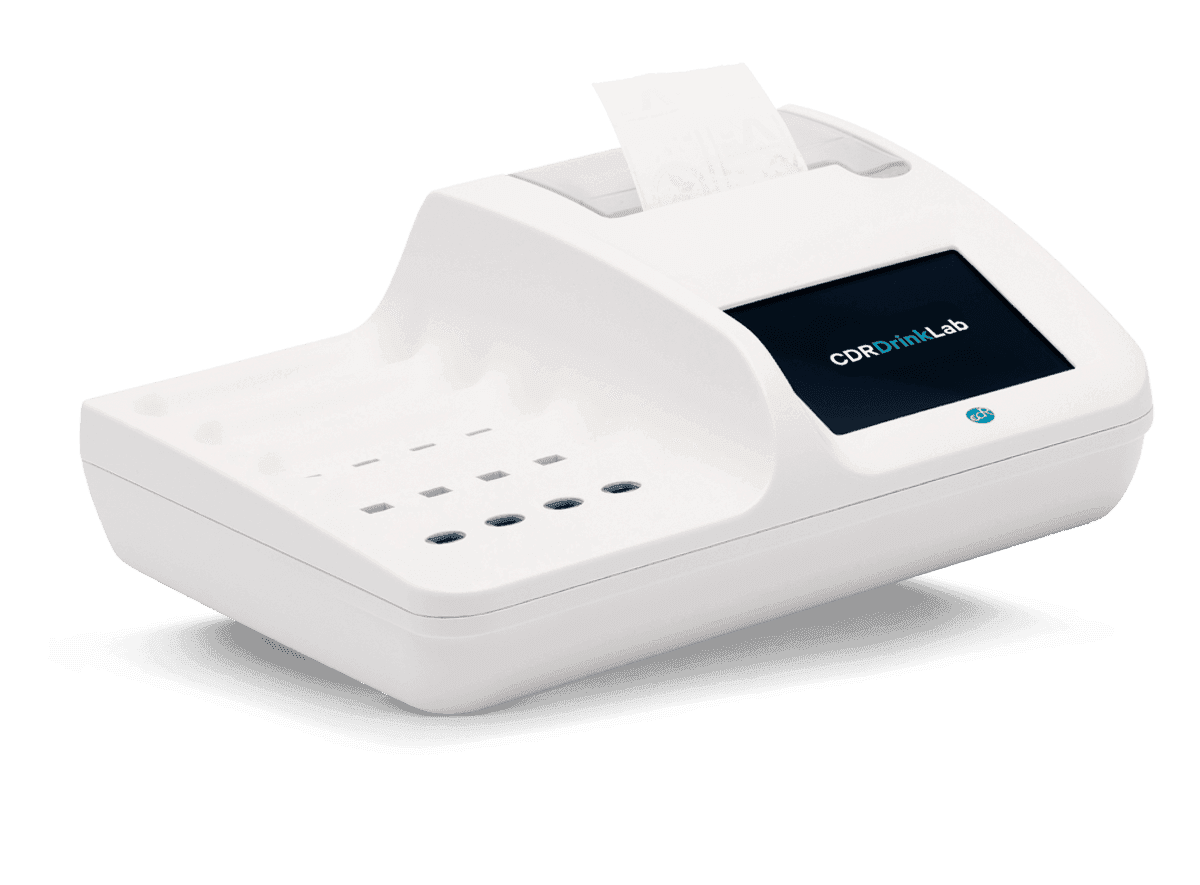
Analysis sessions with multiple samples are possible up to a maximum of 16 tests for CDR DrinkLab®.
...
Sample treatment
Take 900 µL of decolorizing solution *300755 and transfer it to a centrifuge tube (shake the decolorizing solution before use). Add 100 µL of the sample to be analyzed. Shake for 5 minutes and centrifuge (code 222061) for 10 minutes at 12,000 rpm.
Principle of the test
D-lactic acid and L-lactic acid are oxidized through an enzymatic reaction to pyruvic acid with the consequent production of NADH. The increase of absorbance, measured at 366 nm in end-point, is proportional to the lactic acid concentration of the sample. The result is expressed in ppM.
Calibration curve
The calibration curve of the CDR DrinkLab® system confirmed excellent linearity across the entire measurement range.
...
Reagent test Kits
Measuring range
| Analyses | Measuring range | Resolution | Repeatability |
|---|---|---|---|
| Lactic acid D+L | 150 - 3500 ppm | 1 ppm | 73 ppm |
The perfect system for you
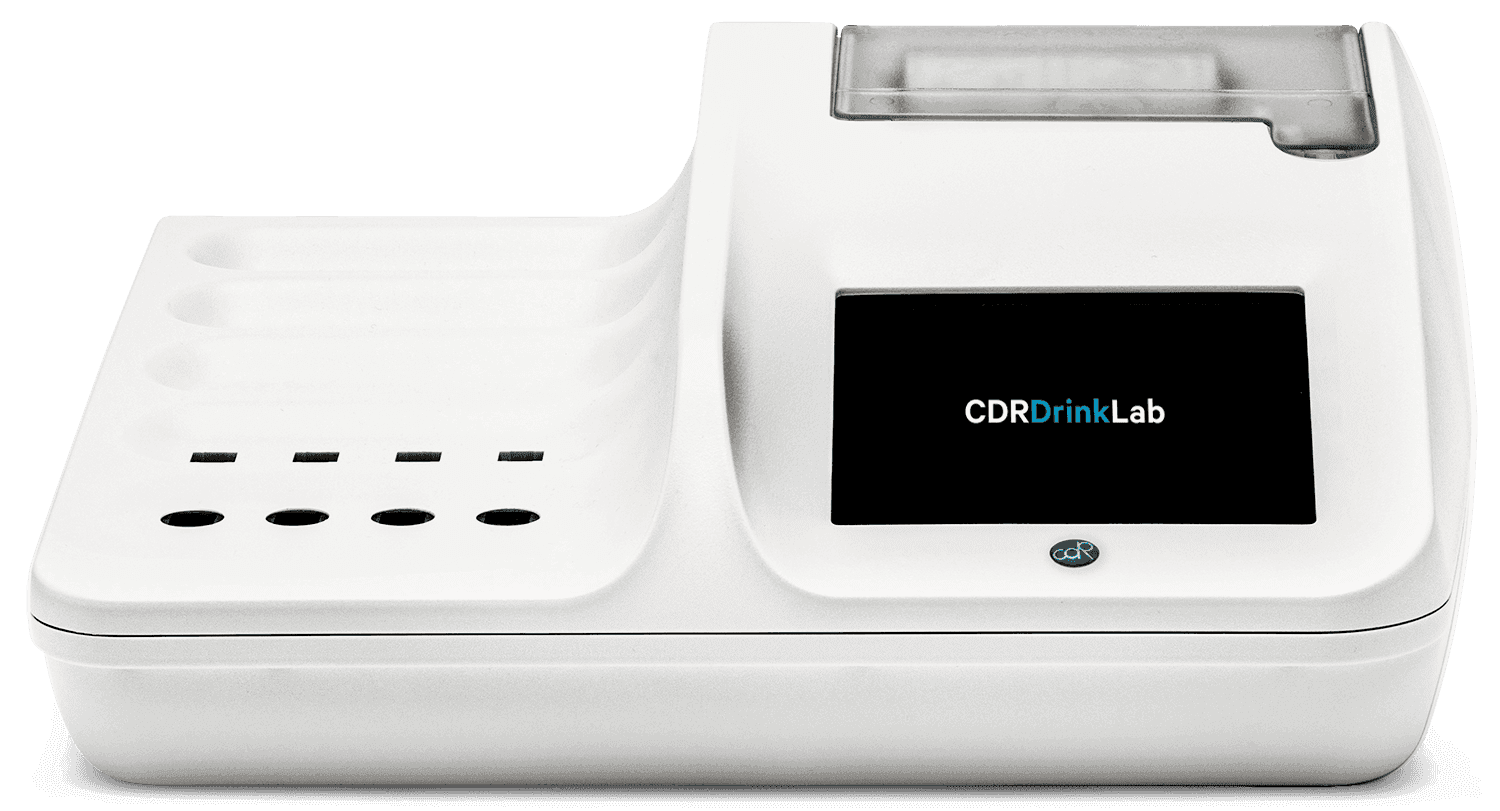
CDR DrinkLab®
Complete analysis panel, supplied already configured
Up to 16 determinations simultaneously
Possibility of carrying out analyses of the same sample
Integrated printer
Full connections (LAN - USB - Bluetooth barcode/QR code reader)