Determination of Sugars in Molasses
The analysis of sugars during molasses fermentation is essential, as it enables the determination of the amount of sugars available to yeasts and provides insight into how they are consumed throughout the process. By monitoring the decrease in sugar concentration, it is possible to track fermentation progress and verify whether it is proceeding regularly. Excessively high residual sugar levels indicate incomplete fermentation or issues in operating conditions, such as nutrient deficiencies or yeast stress.
This analysis also allows the evaluation of process efficiency by comparing initial sugars with those converted into alcohol. Furthermore, sugar monitoring supports the optimization of processing time, yield, and final product quality.
Method
Test type: End Point.
Testing time: 11 minutes.
Analysis sessions with multiple samples are possible up to a maximum of 16 tests for CDR DrinkLab®.
...
Sample treatment
Dilute the sample with the included dilution kit, as required by the method.
Principle of the test
The glucose and fructose present in the sample are determined enzymatically and therefore are not influenced by the presence of the remaining reducing sugars. The Redox reaction is read at 366 nm (end-point) and the value is directly proportional to the concentration of glucose and fructose in the sample.
...
...
Calibration curve
The calibration curve of the CDR DrinkLab® system confirmed excellent linearity across the entire measurement range.
...
Reagent test Kits
Code *300810: 100 test
Code *300815: 10 test
The reagents have a shelf-life of 15 months
Measuring range
| Analyses | Measuring range | Resolution | Repeatability |
|---|---|---|---|
| Sugars (glu,fru,suc)[15-350] g/L | 15 - 350 g/L | 1 g/L | 2 g/L |
The perfect system for you
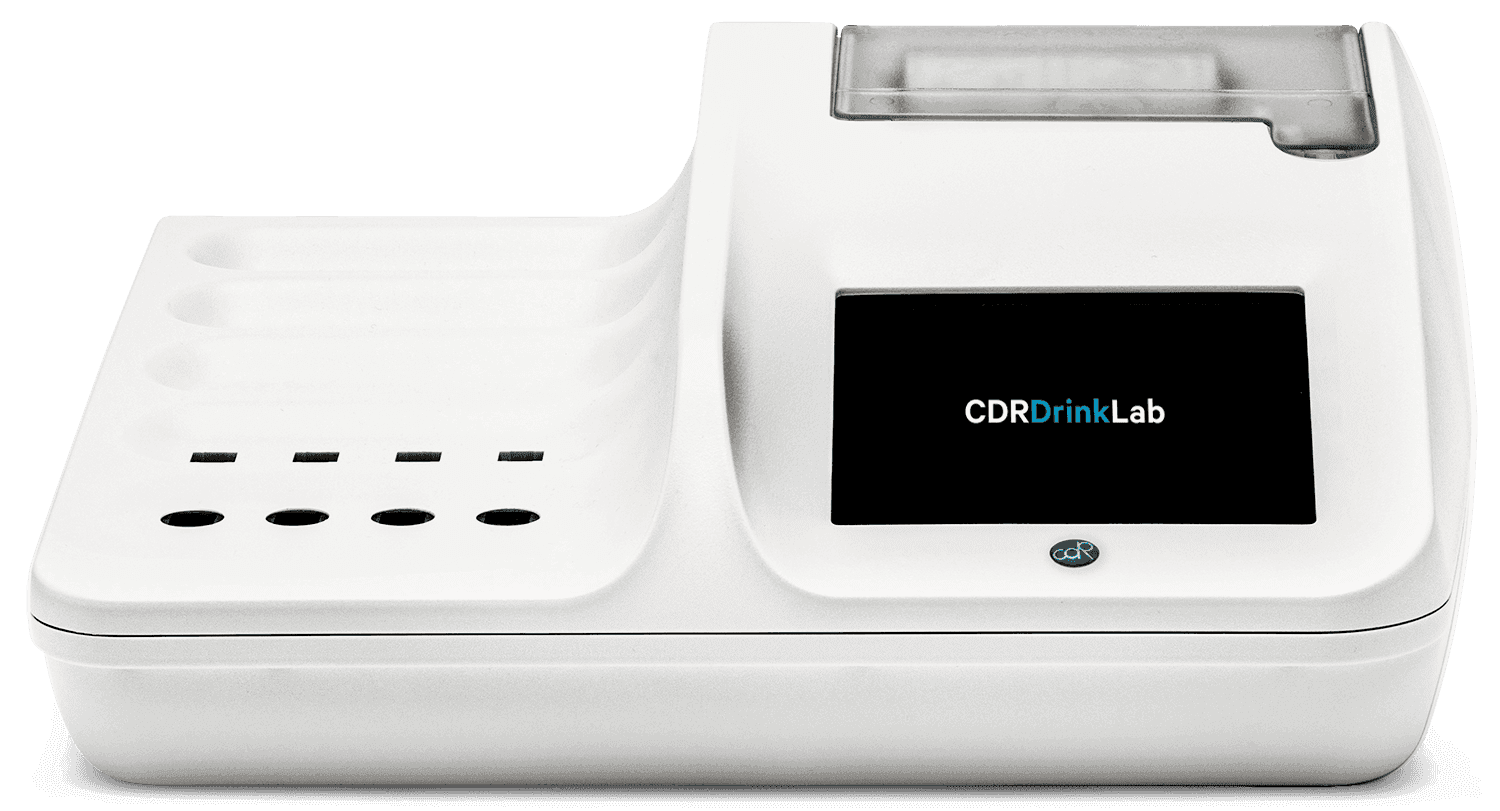
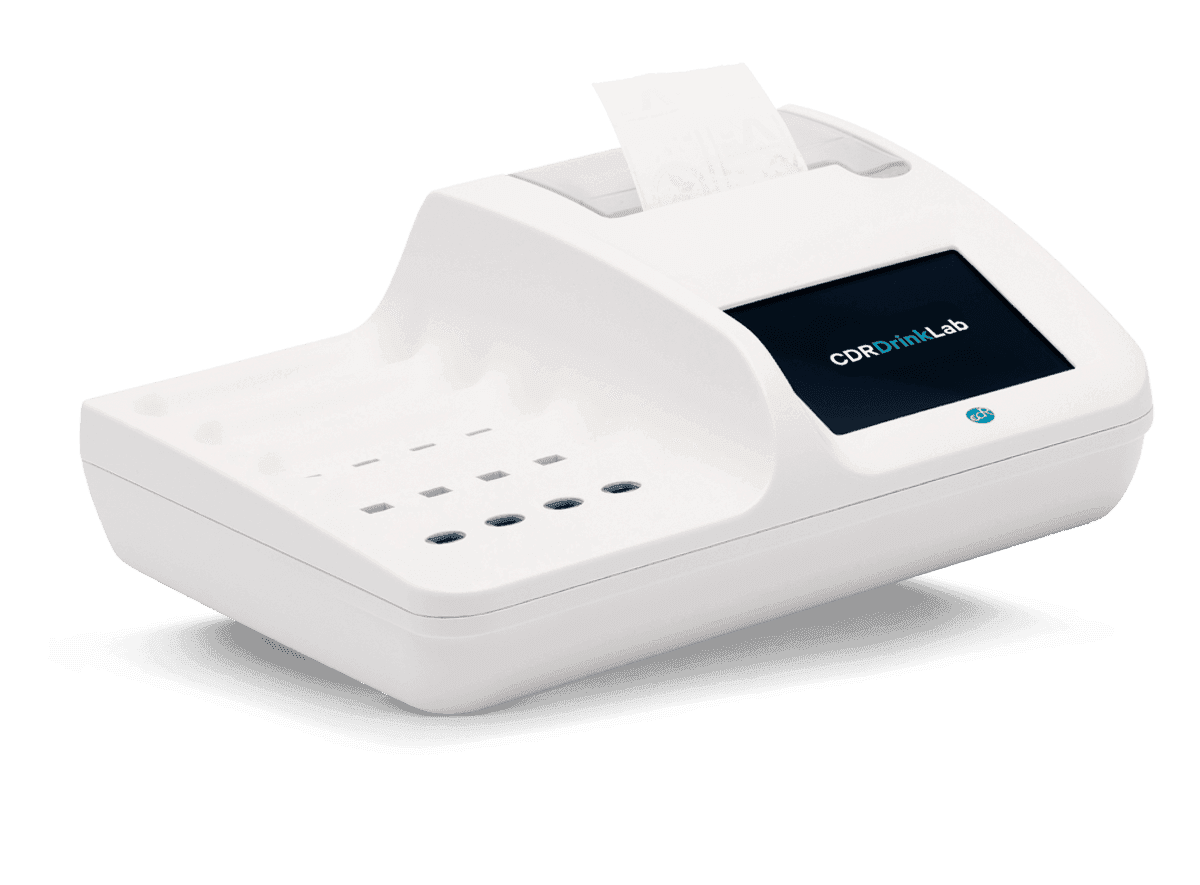
CDR DrinkLab®
Complete analysis panel, supplied already configured
Up to 16 determinations simultaneously
Possibility of carrying out analyses of the same sample
Integrated printer
Full connections (LAN - USB - Bluetooth barcode/QR code reader)