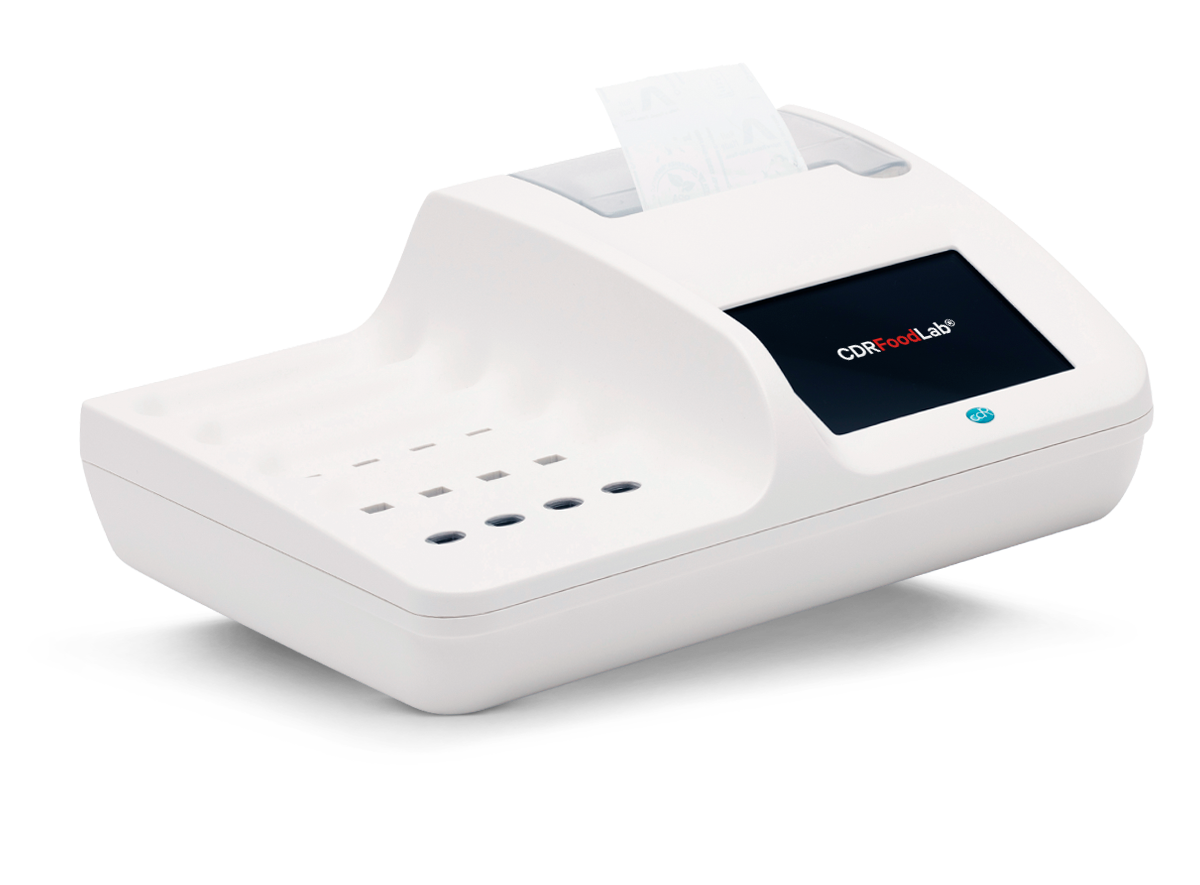
Analysis of Acetic Acid in the dough
Acetic acid is produced by fermentation due to microbial activity. Its concentration depends on the total bacterial count and is a useful indicator of the dough's good state of preservation.
Method
Test type: End Point.
Testing time: 6 minutes.
Analysis sessions with multiple samples are possible up to a maximum of 4 tests for CDR FoodLab® and 3 tests for CDR FoodLab® Junior.
...
Sample treatment
Weigh 10 grams of paste or flour and add 100 grams of distilled water (different quantities can be weighed, maintaining the same proportions). Process the sample in a Stomacher or other stirring system for 3 minutes. Centrifuge the sample for 5 minutes at 5000 rpm.
Principle of the test
Through an enzymatic reaction, acetic acid is converted into pyruvic acid, which in turn reacts with NADH producing NAD+ and D-Lactic acid. The reduction of absorbance, measured at 366 nm (end-point), of the NADH solution is proportional to the quantity of acetic acid present in the sample.
Calibration curve
The calibration curve of CDR FoodLab® confirms the excellent linearity of the system over the whole testing range.
...
Reagent test Kits
Measuring range
| Analyses | Measuring range | Resolution | Repeatability |
|---|---|---|---|
| Acetic acid dough | 0.05 - 1.2 g/Kg | 0.01 g/Kg | 0.02 g/Kg |
The analyzers for oils and fats quality control
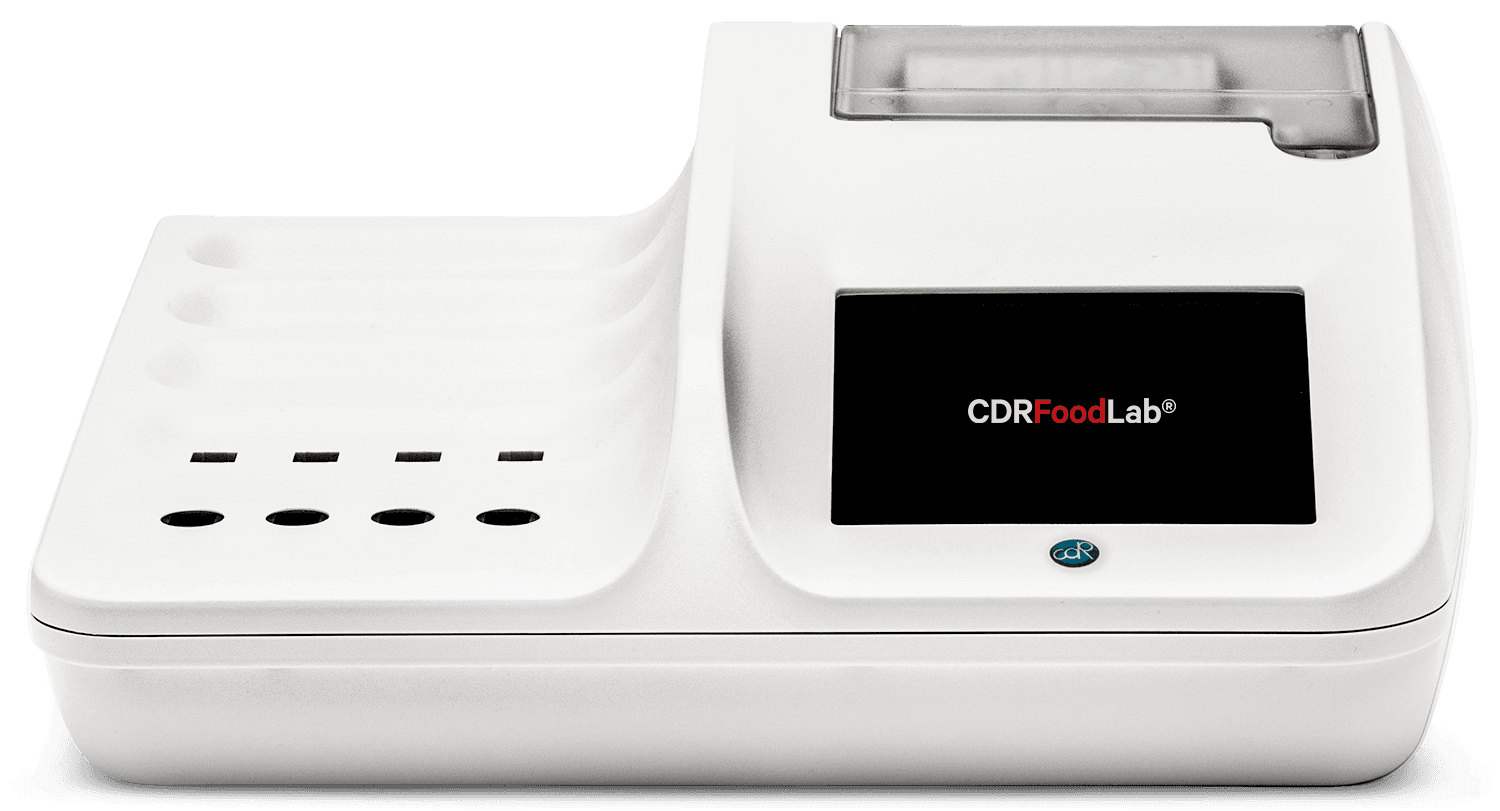
CDR FoodLab®
Complete analysis panel, supplied already configured
Up to 16 determinations simultaneously
Possibility of carrying out analyses of the same sample
Integrated printer
Full connections (LAN - USB - Bluetooth barcode/QR code reader)
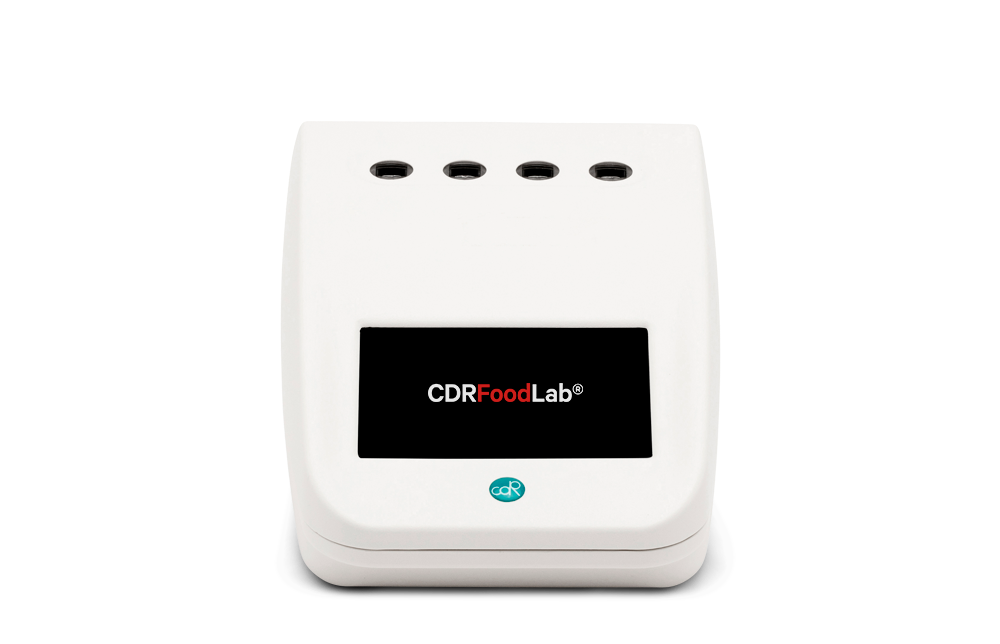
CDR FoodLab® Jr
Partial analysis panel, customisable configuration
Up to 3 determinations simultaneously
Wireless connection to external printer
USB connections