Analysis of Chloride in tomato derivatives
The chloride test allows to identify the possible addition of sodium chloride in the tomato. The addition of salt is legislated on the basis of the type of product to be produced and therefore must respect the established limits. This analysis allows to quantify the concentration of salt in products such as peeled tomatoes, tomato puree and other derivatives.
Method
Test type: End Point.
Testing time: 5 minutes.
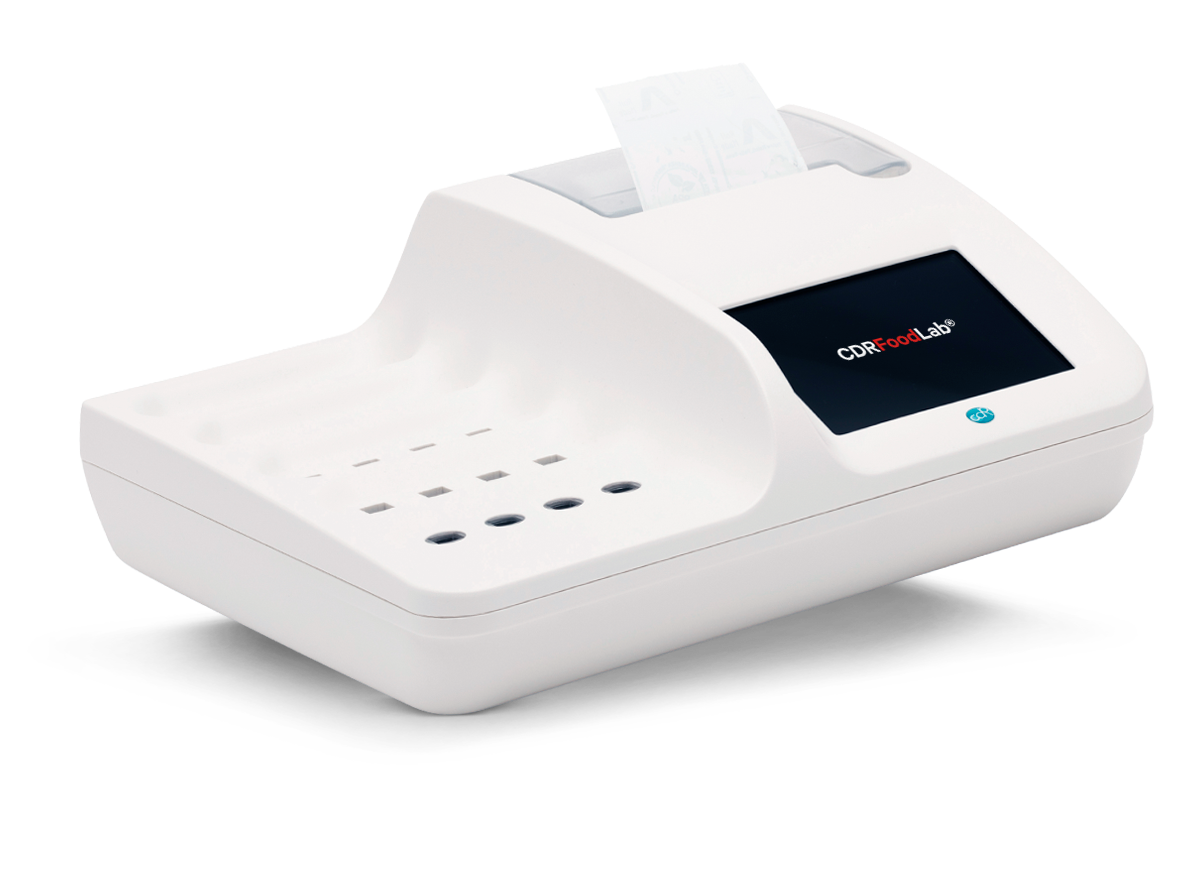
Analysis sessions with multiple samples are possible up to a maximum of 16 tests for CDR FoodLab® and 3 tests for CDR FoodLab® Junior.
...
Sample treatment
Filter the sample before analysing.
Principle of the test
Chloride ions react with mercuric thiocyanate and form thiocyanate ions. The thiocyanate ions react with the Fe (III), giving an orange-colored complex whose intensity, measured at 505 nm, is directly proportional to the concentration of chlorides in the sample.
...
Calibration curve
Comparative tests, on samples of tomato performed between the reference method and the CDR FoodLab® method, made in a leading tomato production company, have confirmed a very good alignment between the two systems.
...
Reagent test Kits
Measuring range
| Analyses | Measuring range | Resolution | Repeatability |
|---|---|---|---|
| Chlorides [0.90 - 7.00]% | 0.9 - 7 g% NaCl | 0.01 g% NaCl | 0.22 g% NaCl |
| Chlorides [0.01 - 1]% | 0.01 - 1 g% NaCl | 0.01 g% NaCl | 0.01 g% NaCl |
Analyzers for quality control of tomato products
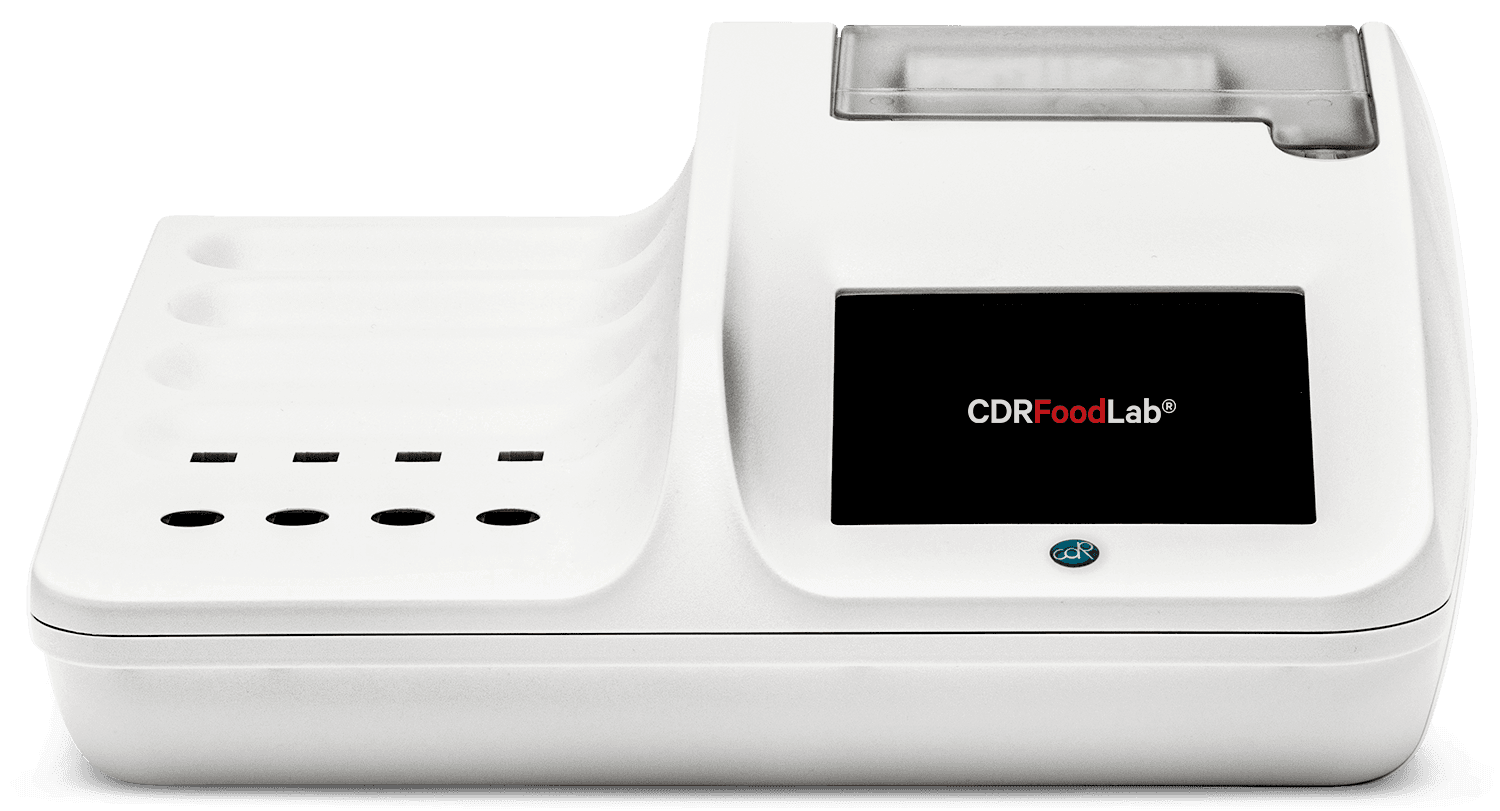
CDR FoodLab®
Complete analysis panel, supplied already configured
Up to 16 determinations simultaneously
Possibility of carrying out analyses of the same sample
Integrated printer
Full connections (LAN - USB - Bluetooth barcode/QR code reader)
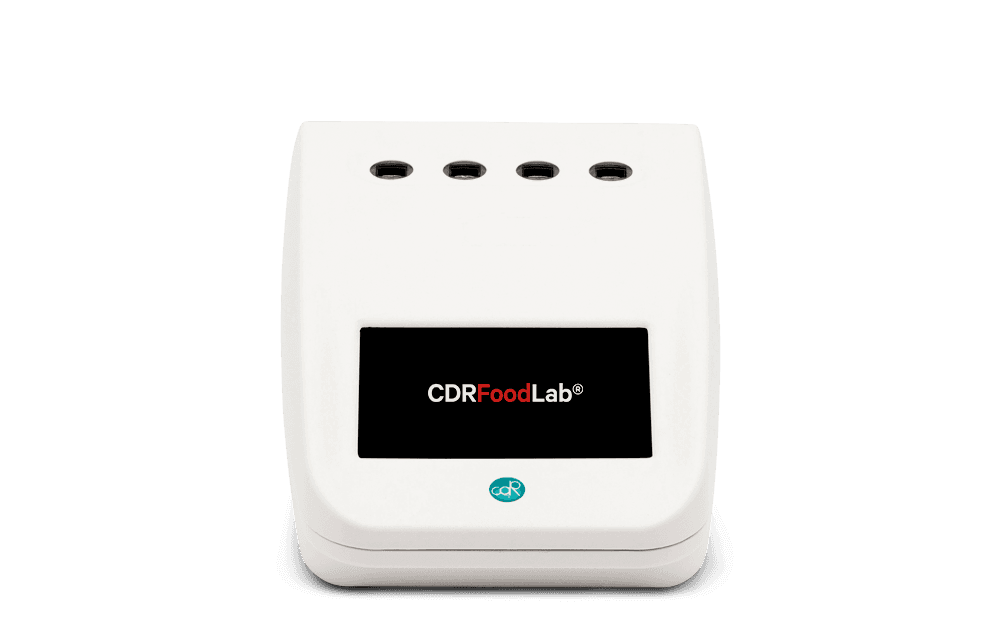
CDR FoodLab® Jr
Partial analysis panel, customisable configuration
Up to 3 determinations simultaneously
Wireless connection to external printer
USB connections