Chemical test for lactose in milk and dairy products
Lactose is a reducing sugar, which is present in milk in concentrations ranging from 4.5 to 5 g/100 gr. The lactose molecule is a disaccharide composed of one glucose and one galactose sub-units, and is indispensable for many fermentation processes that take place within milk.
The reduced secretion of the lactase enzyme in human beings is associated with an intolerance to lactose, and, accordingly, to milk and its derivative products.
The test is suitable for use on lactose free products, where a part or all the lactose has been broken down to glucose and galactose by the lactase enzyme, it is also suitable for products where lactose is normally present.
Method
Test type: End Point.
Testing time: 10 minutes.
Analysis sessions with multiple samples are possible up to a maximum of 6 tests for CDR FoodLab® and 3 tests for CDR FoodLab® Junior.
Sample treatment
Milk: Dilute 1 part of milk + 10 parts of water. E. g. take 100 μL of milk and add it to 1 mL of distilled water. It is possible to use the specific dilution kit.
Yogurt and cream: Dilute the sample to 1+10. For example, 100 μL yogurt diluted in 1 mL distilled water.
Cheese, margarine and butter: Weigh 10 g sample and transfer it in a Stomacher bag with filter. Add 100 mL of distilled water and mix in the Stomacher for 3 minutes. Take the filtered solution to test.
N.B.= The quantities are indicative and can be varied while keeping the proportions unchanged.
Principle of the test
Lactose is split in glucose and galactose.
Glucose reacts with a phenolic compound through an enzymatic reaction, with peroxidase, and forms a pink coloured complex. The absorbance of the complex is read at 505 nm, and the value is directly proportional to the concentration of lactose in the sample.
Calibration curve
The accuracy of the CDR FoodLab® method was evaluated by determining the correlation between the results of different milk samples, obtained by analysis with CDR FoodLab® and those obtained by the Istituto Zooprofilattico by means of the HPLC method (High Performance Liquid Chromatography) as foreseen by the method of reference MP 02/050 rev.6- 2018. [Take a look at the complete study]
...
The Poligny ACTALIA (France) reference laboratory, specialising in food analysis, performed an evaluation study: the analysis of lactose on lactose-free milk was performed with CDR FoodLab® and with the HPLC method (ISO 22662) . The correlation R2 = 0.9882 is excellent considering the type of analysis and the difficulty in performing the reference methods.
...
Reagent test Kits
Measuring range
| Analyses | Measuring range | Resolution | Repeatability |
|---|---|---|---|
| Lactose [1.5-5.5 g/100g] | 1.5 - 5.5 g/100g | 0.01 g/100g | 0.09 g/100g |
| Lactose [0.01-2 g/100g] | 0.01 - 2 g/100g | 0.01 g/100g | 0.05 g/100g |
| Lactose [0.01-2 g/100g] Yogurt | 0.01 - 2 g/100g | 0.01 g/100g | 0.05 g/100g |
| Lactose [0.01-2 g/100g] Cheese | 0.01 - 2 g/100g | 0.01 g/100g | 0.05 g/100g |
Analyzers for quality control of milk and dairy products
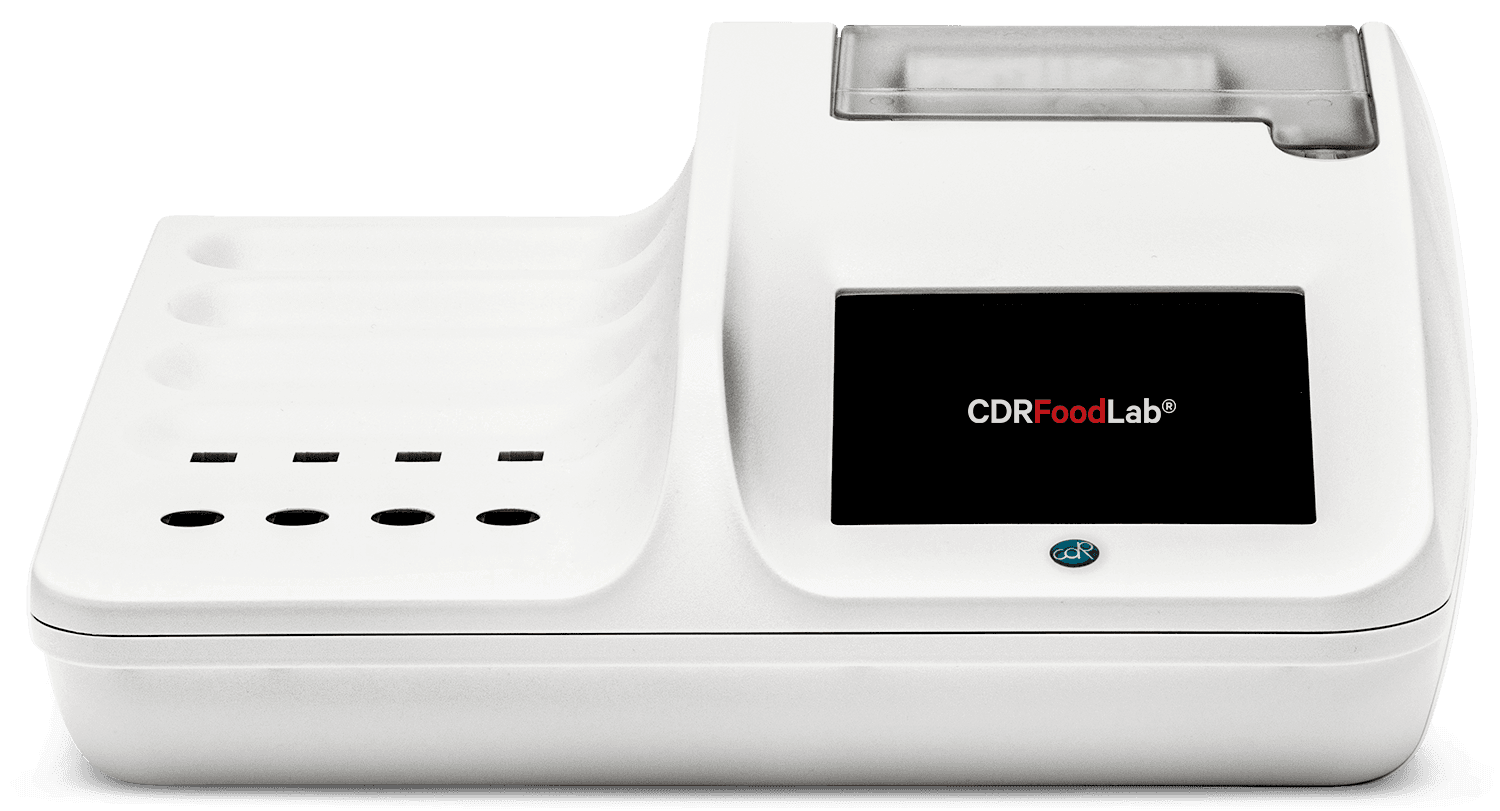
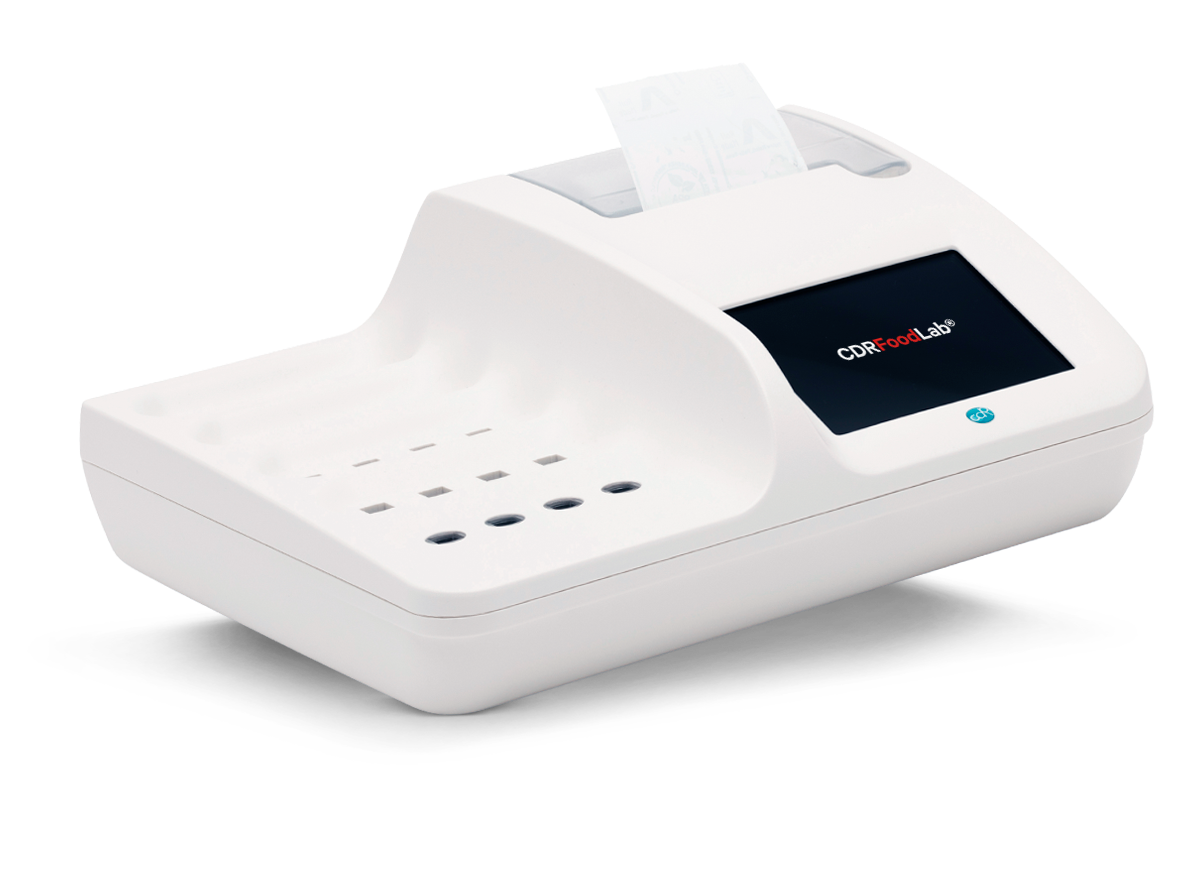
CDR FoodLab®
Complete analysis panel, supplied already configured
Up to 16 determinations simultaneously
Possibility of carrying out analyses of the same sample
Integrated printer
Full connections (LAN - USB - Bluetooth barcode/QR code reader)
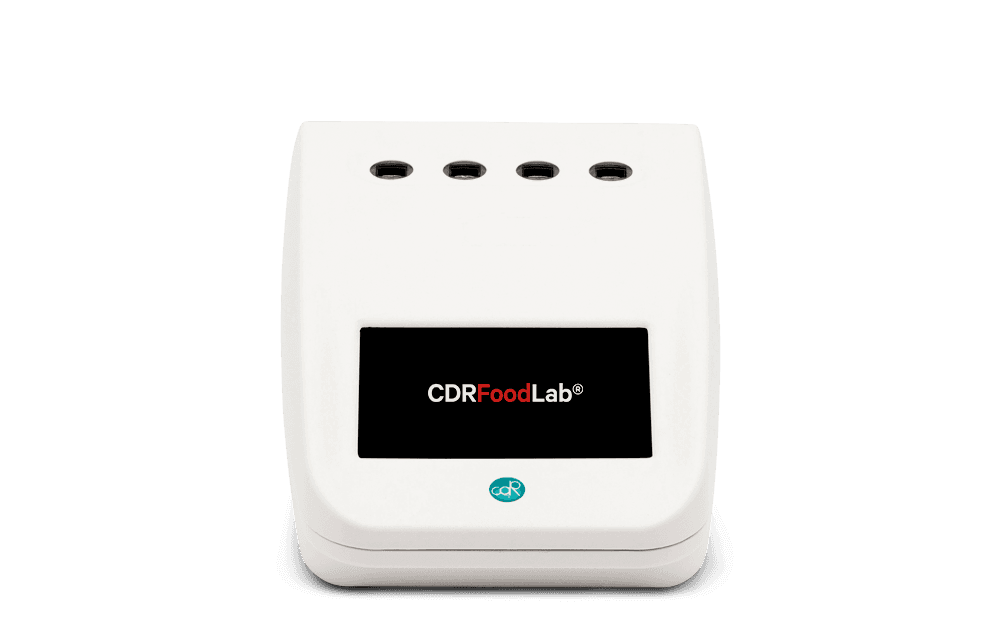
CDR FoodLab® Jr
Partial analysis panel, customisable configuration
Up to 3 determinations simultaneously
Wireless connection to external printer
USB connections